
Dental anxiety
Why Dental Anxiety Is Real, and 5 Ways to Feel Calmer
If the thought of a dental appointment makes your stomach tighten, your mouth dry, or your heart race, you are not being dramatic. Dental anxiety is a real, physical response, and it is far more common than most people admit. This guide explains where it comes from, how it differs from ordinary nervousness, and five practical steps you can take before your next visit.
Why dental anxiety is real
Fear is wired into us for good reason. When the brain perceives a threat, the amygdala signals the body to release adrenaline and cortisol. Heart rate climbs, breathing quickens, muscles tense, and digestion slows. Your body is preparing to fight or run, even though a dental chair is not dangerous in the way a real predator would be.
A dental visit combines several things the brain tends to read as threatening at once: the whine of a handpiece, the smell of disinfectant, bright light in your eyes, a reclined position where you cannot see what is happening, and the sense that someone else is controlling your body. If you had a painful experience in the past, even a single childhood visit can leave a memory that the brain attaches to every new appointment.
Anxiety also feeds on uncertainty. Many patients are less afraid of the drill itself than of not knowing what it is for, how long it will take, or how much it will cost.
Anxiety versus ordinary fear
Ordinary fear is a reasonable response to a specific, immediate event, such as a tooth that suddenly hurts or an injection you know is coming. It passes once the situation ends.
Dental anxiety is more persistent. It is the worry that starts days before an appointment, the urge to cancel, or the avoidance that lasts for years. Dental phobia is the most severe end of the spectrum, where fear keeps a person away from care even while they are in pain.
This distinction matters because avoidance creates its own problems. A small cavity that could be filled in one visit can turn into a root canal, and a bleeding gum can become bone loss. Each postponed visit makes the next one harder, which is why many people with dental anxiety end up needing more treatment than they would have otherwise.
How I approach anxious patients
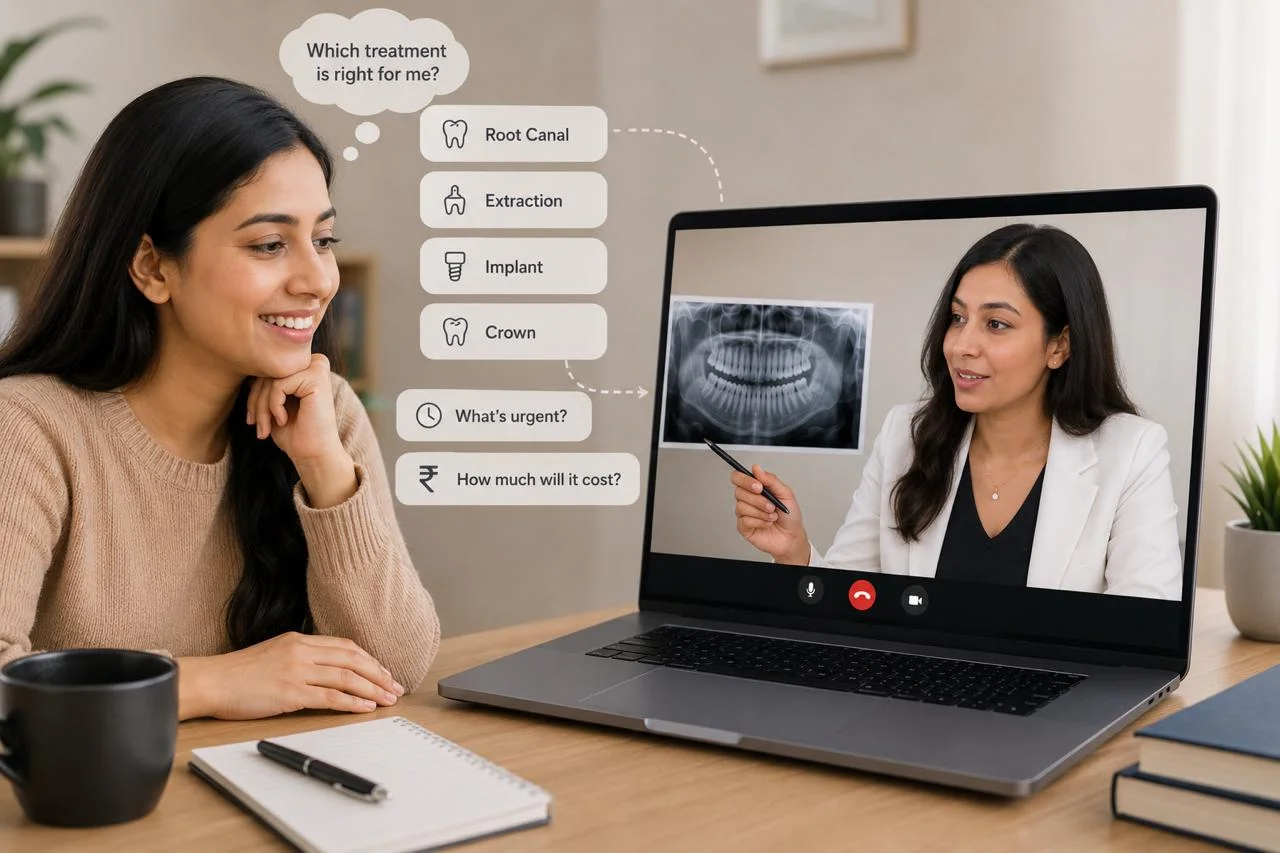
Most of my work with anxious patients starts before any treatment is discussed. I ask what worries you most, then explain the problem in plain language, with X-rays or photos where they help. I separate what is urgent from what can safely wait, so you are not carrying a long list of fears at once. And I tell you what I am going to do before I do it.
When treatment is needed, we agree on a signal you can use to pause at any time, such as raising a hand. Feeling in control is often the single biggest change for an anxious patient. Online guidance is designed for exactly this step: you can understand your situation and your options before you decide anything, and well before you sit in a chair.
Five ways to overcome dental anxiety
1. Tell your dentist about your fear, and agree on a stop signal
Most dentists would rather know. A simple hand-raise that means “pause” gives you control, and a good dentist will stop and explain before continuing.
2. Ask for the plan in writing
Ask what the treatment is, why it is needed, how many visits it will take, and what it costs. A written plan turns the unknown into a list you can review at home, which many patients find calming.
3. Slow your breathing
Anxiety shortens your breath. Try breathing out for longer than you breathe in, for example in for four counts and out for six. Practise for a minute or two before the appointment so the technique feels familiar when you need it.
4. Use distraction
Music or a podcast through earphones, an eye mask, or a stress ball can shift attention away from sounds that feel difficult. Ask your dentist whether earphones can stay in during the treatment you need.
5. Discuss sedation or professional support
Depending on your health and the procedure, options such as nitrous oxide (laughing gas) or oral sedation may be possible. Your dentist can explain suitability and risks. For severe phobia, a psychologist trained in cognitive behavioural therapy (CBT) can help with the fear itself.
Please note: This article is general information and does not replace an examination. If you have sudden severe pain, facial swelling, fever, or difficulty swallowing or breathing, get in-person dental or medical care immediately.
Ready for clarity?
Your first chat with Dr. Chitra is free. Message her on WhatsApp, or book a focused session if you want a deeper discussion of your situation.
Frequently asked questions
Is dental anxiety a real medical condition?+
Yes. Dentists and psychologists recognise it, and severe cases are often described as dental phobia. Treatment options exist, and dentists see it often.
Can I stop treatment if I get scared?+
In most cases, yes. Agree a stop signal with your dentist before treatment begins, and ask them to explain each step.
Can I get sedation for a filling?+
Sometimes, depending on your health, the procedure, and your dentist's training. Ask directly, and mention every medicine you take.
Can an online consultation help before I see a dentist?+
Yes. Understanding your situation beforehand often makes the in-person visit feel less unknown. It does not replace an examination.